Mapping Certification Pathways via Unified Audit Logs and Hardware Validation in Dynamic Service Releases
Written by Frankie Schmitz · Oct 5, 2026
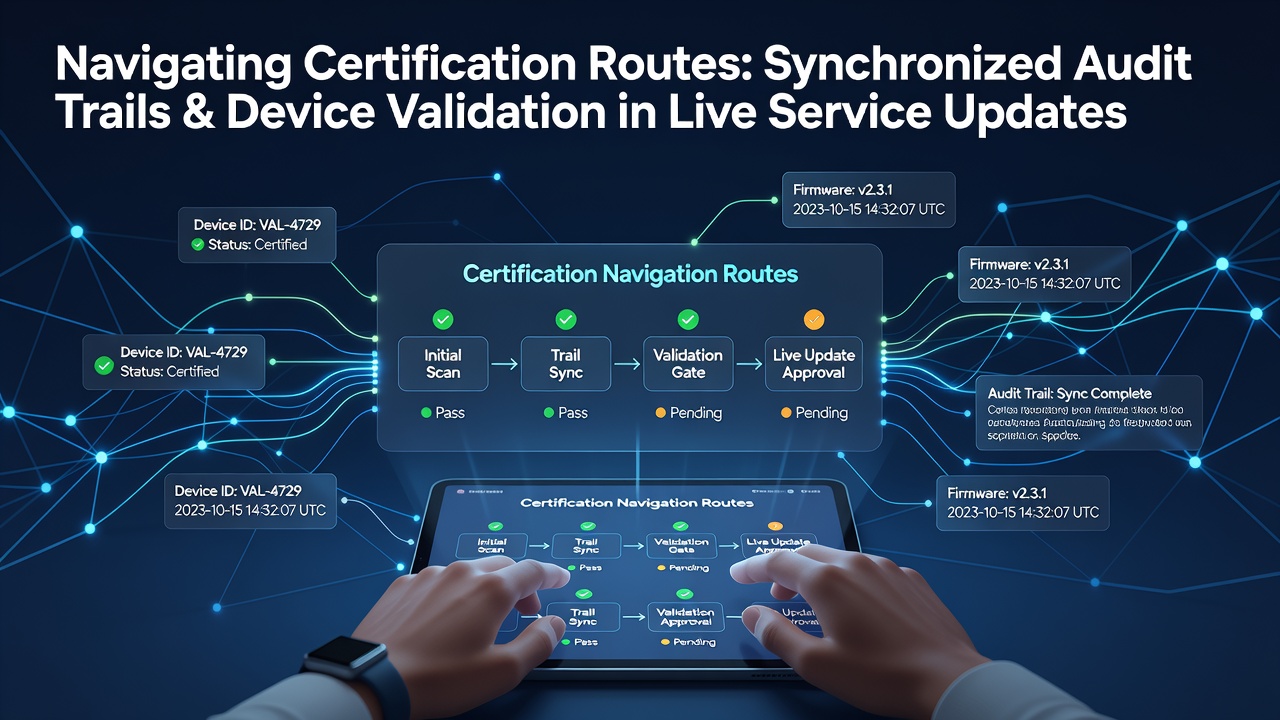
Mapping Certification Pathways via Unified Audit Logs and Hardware Validation in Dynamic Service Releases
Certification processes for live service updates rely on synchronized audit trails that record every modification across development pipelines and deployment stages, while device validation confirms hardware compatibility before releases reach users. Research from the International Organization for Standardization indicates that organizations maintaining unified logs achieve faster compliance verification, particularly when updates occur weekly or more frequently in gaming and software sectors. Data from 2025 industry reports shows audit synchronization reduces certification timelines by up to 30 percent in cross-platform environments.
Core Components of Audit Trail Synchronization
Audit trails capture timestamps, code changes, and access events in real time, and when synchronized across multiple teams they create a single source of truth that regulators and internal reviewers can access without delays. Observers note that this approach prevents discrepancies that arise when separate logs from development, testing, and operations remain isolated. In practice, tools that merge these records automatically flag inconsistencies before certification reviews begin, allowing teams to address issues during the update cycle rather than afterward.
Standards bodies such as the European Committee for Standardization emphasize consistent logging formats that support traceability from initial commit to final deployment. Teams that adopt these formats report fewer certification rejections, since reviewers encounter complete histories instead of fragmented data sets. What's interesting is how synchronization extends beyond internal systems to include third-party libraries and cloud services, ensuring every dependency appears in the trail.
Device Validation Within Certification Routes
Device validation examines hardware specifications, operating system versions, and performance metrics against predefined criteria before live service updates proceed. Researchers at institutions like the University of California, Berkeley have documented that validation matrices covering both current and legacy devices catch compatibility failures that would otherwise surface post-release. These checks integrate directly with audit trails, so any validation failure triggers an entry that certification teams can reference immediately.
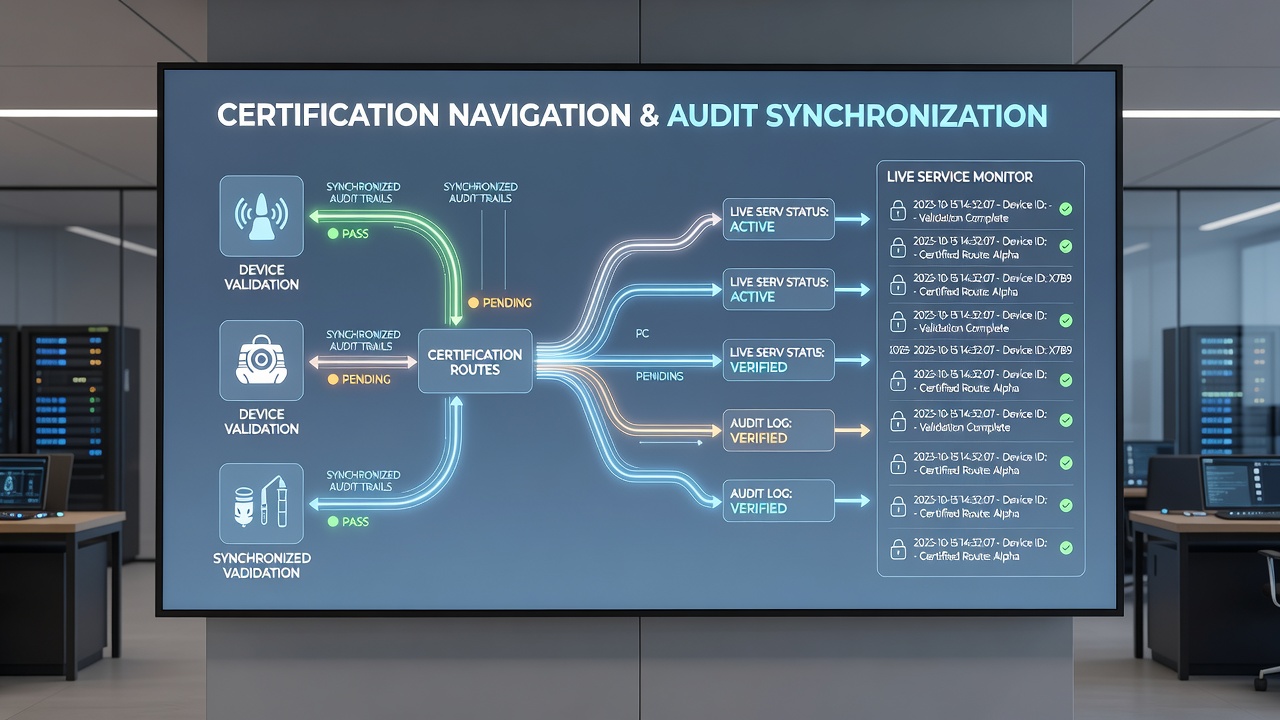
Validation protocols often include automated scans for memory usage, network latency, and graphics rendering on target hardware. When these scans align with synchronized logs, certification pathways shorten because evidence of compliance exists in one accessible location. In October 2026, updates to Canadian digital standards are scheduled to require expanded device coverage for services targeting public sector applications, prompting many development teams to refine their validation layers ahead of that deadline.
Integration Across Live Service Environments
Live service updates introduce continuous deployment cycles that demand certification methods capable of keeping pace. Synchronized audit trails combined with device validation allow incremental releases to receive approval without halting ongoing operations. Industry organizations such as the Entertainment Software Association have published guidance showing that integrated systems lower the risk of post-update compliance issues across console, mobile, and PC platforms.
One study revealed that projects using layered validation webs, where audit data feeds directly into device tests, maintained higher uptime during certification windows. Teams coordinate these elements through shared dashboards that highlight pending validations and trail gaps, enabling rapid resolution before updates go live. The reality is that without this integration, delays compound when separate review processes run sequentially.
Regulatory and Industry Alignment
Regulatory frameworks in various regions now reference synchronized documentation as a baseline for approval. The Australian Competition and Consumer Commission outlines expectations for traceability in digital services, while similar expectations appear in updates from the U.S. National Institute of Standards and Technology. Certification routes therefore incorporate these requirements into daily workflows rather than treating them as final hurdles.
Companies that map their audit and validation processes to these frameworks encounter smoother interactions with oversight bodies. Evidence suggests that early alignment also supports international releases, since many standards share overlapping data requirements. Teams often maintain mapping documents that link internal logs to specific regulatory clauses, further streamlining the certification journey.
Conclusion
Certification navigation in live service contexts depends on the consistent linkage of synchronized audit trails with device validation procedures. Organizations that embed these practices into their pipelines meet regulatory expectations more efficiently while supporting frequent update schedules. Continued refinement of these methods will shape how services maintain compliance across expanding hardware ecosystems in the years ahead.