Integrating Hardware Evaluations and Community Feedback for Enhanced Validation Across Gaming Platforms
Written by Devon Schröder · Sep 21, 2026
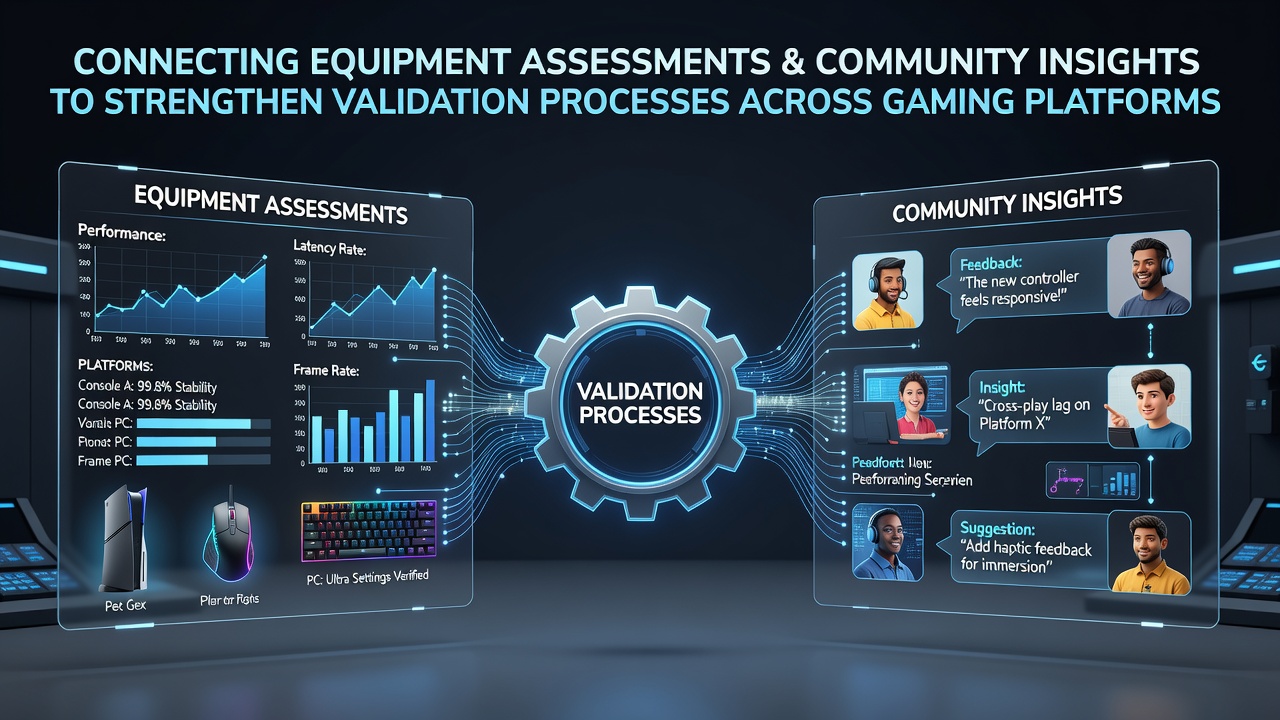
Integrating Hardware Evaluations and Community Feedback for Enhanced Validation Across Gaming Platforms
Hardware evaluations form the foundation of validation processes in gaming platforms where devices undergo systematic checks for performance under varied loads and configurations. Researchers have documented how these assessments identify compatibility issues across consoles, PCs, and mobile systems while community insights supply real-world usage patterns that lab tests often miss. When combined the two approaches create validation frameworks that address both technical specifications and player-reported anomalies, and studies from organizations like the Entertainment Software Association indicate rising adoption of such integrated methods in multi-platform releases.
Core Components of Equipment Assessments
Equipment assessments involve stress testing hardware components such as processors, graphics units, and memory modules to measure stability during extended play sessions. Data from these evaluations reveal thermal thresholds, frame rate consistency, and power consumption metrics that developers use to set platform-specific requirements. Observers note that standardized protocols help align results across different testing environments, yet variations in regional standards can influence how findings translate into certification criteria for global distribution.
Role of Community Insights in Validation
Community insights emerge from aggregated player reports, forum discussions, and in-game telemetry that highlight issues like input lag or device-specific crashes not captured in controlled settings. Analysts have found that structured feedback systems allow platforms to prioritize patches based on frequency and severity reported by users across regions. This input becomes particularly valuable when hardware configurations differ from those used in initial assessments, and patterns identified through large-scale data collection often guide targeted re-evaluations of affected equipment.
Connecting the Two for Stronger Processes
Linking equipment assessments with community insights occurs through shared databases where test results receive cross-referencing against player-submitted data to flag discrepancies early. Teams then conduct follow-up hardware reviews focused on configurations mentioned in feedback clusters, which refines validation criteria and reduces recurrence of similar problems in subsequent updates. According to reports from the European Games Developer Federation this integration has supported more consistent performance across platforms in recent development cycles.

Implementation typically follows phased workflows where initial hardware scans establish baseline data, after which community monitoring tracks deviations in live environments. When anomalies surface developers trigger supplemental assessments that incorporate the specific conditions described by users, and this cycle continues until stability metrics align with established thresholds. Research indicates such iterative approaches have contributed to measurable improvements in cross-platform certification rates during 2025 and into projections for September 2026 industry reviews.
Application Across Gaming Platforms
Cross-platform validation benefits when hardware assessments account for differences in operating systems and input methods while community data supplies usage statistics from diverse player bases. Platforms operating under unified certification pathways use these combined inputs to adjust compatibility lists and performance targets dynamically. Evidence from academic studies at institutions such as the University of Southern California shows that incorporating regional feedback variations leads to validation models that perform more reliably when games deploy simultaneously on multiple ecosystems.
Challenges and Adjustments in Practice
Challenges arise when community reports contain incomplete device specifications or when hardware tests fail to replicate exact player setups encountered in the field. Organizations address these gaps by refining data collection tools and expanding test matrices to include emerging hardware variants identified through feedback analysis. Observers have documented gradual standardization efforts among industry groups that aim to harmonize assessment outputs with community-derived insights without compromising the objectivity of either source.
Conclusion
Integration of equipment assessments and community insights continues to shape validation processes by supplying complementary datasets that together support more comprehensive platform certification. Ongoing refinements in data correlation techniques and feedback aggregation methods suggest further evolution in how gaming platforms maintain stability across expanding hardware landscapes, with scheduled industry analyses expected to track these developments through September 2026 and beyond.